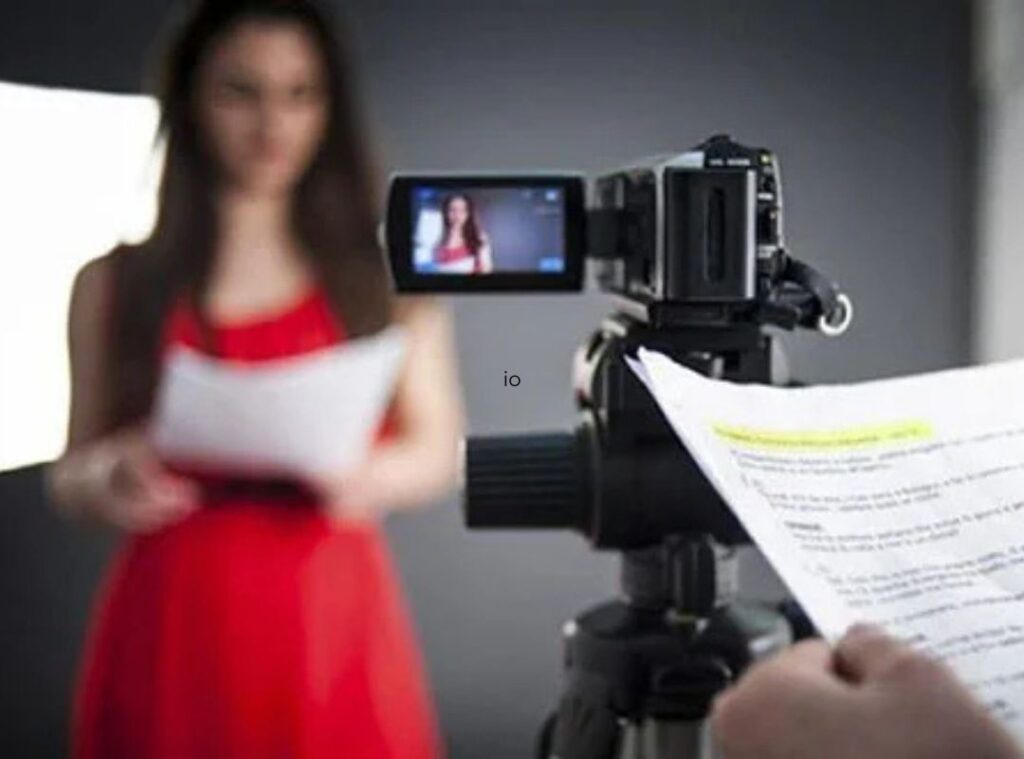
Since self-tapes are done on your own time and can be re-recorded as many times as you need, directors expect to see your best possible work. Your self-tape should be as high quality as it can be to showcase what you have to offer. Take a look at the list below for 10 tips on creating your most successful audition tape.
1. Shoot Horizontally and Stay in Frame
Your audition tape should always be shot horizontally. Frame yourself chest up, being sure not to cut off the top of your head or leave too much empty space above you. This framing is called a medium close-up. Be careful not to move around too much during your scene and accidentally step out of focus or out of frame.
Your camera should be placed at eye level. If you are working with a reader in person, have them stand directly to the left or right of the camera to set your eye line. If you are working with a reader over the phone or FaceTime, mentally set your eye line and keep it consistent. Except when you introduce yourself, you should never be looking directly into the camera. It’s important that the people watching your tape are able to see your eyes without it looking like you’re staring at them. Bonus tip – if your scene partner is reading for multiple characters, set your eye line at a slightly different place for each one, the way you would look between multiple actors on set.
2. Keep Your Background Clear
You should always film in front of a blank, neutral background. A plain wall in white, grey, blue, or another neutral color works perfectly. There should be no furniture or objects – and certainly no clutter – visible behind you. The aim is to keep your audition looking clean and professional and to avoid drawing focus away from the subject: you!
If you don’t have a blank wall available or live in a tight space, backdrops kits are available in various colors and are easy to collapse and store away. When ordering yourself a kit, keep in mind your complexion, hair, and the colours you usually wear to choose a backdrop colour that will make you pop.
3. Audio
When it comes to audio quality, try to avoid distracting background noises such as loud traffic or a barking dog.
4. Lighting
Good lighting is another crucial element to a successful self tape. If you’re recording in natural light, try to position yourself with the window in front of you to avoid back lighting or casting strong shadows across your face. If you’re using lamps or other light sources, record some test shots to make sure the lights aren’t creating harsh shadows on your face or the wall behind you.
5. Know Your Lines
You should strive to be fully memorized for your self-tape. If memorization is not possible in your timeframe, try to be as familiar as possible with your lines because it allows you to connect with the character. You will be able to make strong, grounded choices and feel confident telling the story–which will allow the director to see more clearly what you uniquely bring to the role. Remember, the beauty of a self-tape is that you can always record another take if you forget a line.
If you do need to consult your script, try to find a way to incorporate it seamlessly into your self-tape. For example, for your character it might be natural for you to consult your “notes” onscreen. Or, consider posting your sides on a nearby wall instead of holding them in your hand. If you do need to keep your script in hand, be sure to hold the papers as still as possible. Rustling sounds or the paper popping up into frame can be very distracting.
6. Dress for Success
There are no hard and fast rules when it comes to dressing for your self-tape. Choose clothing that you feel comfortable in, that is somewhere between casual and dressy. Dressing in full costume is unnecessary for a self-tape. By this point the director will have their design vision in mind; they want to see YOU, and how you will fit into that vision.. With that said, you can still wear clothing that suggests the essence of the show or character, without wearing a costume. If the role you’re auditioning for is a lawyer or business executive, opt for a button down over a casual t-shirt. If you’re trying out for a high school student, opt for a tee paired with a denim jacket rather than a blazer. In any case, avoid wearing distracting jewelry, hats, accessories, or overly heavy makeup. The focus of the tape should always be on you and your performance, not your outfit.
7. Choose Your Reader
If you are reading a scene and it requires a scene partner choose someone who will be fun to play with! Make sure you are able to read through the scene a few times together so that they are prepared and you can hear it out loud. Remember that if you can’t find someone to work with in person, you can always have an actor read lines for you over the phone.
8. Remember the Medium
Remember that acting for a video is different than acting on stage. Stage actors must project to be heard from the last row in the theatre. In a video, however, the camera is just feet away from the actor. In this same vein, bold facial expressions can be perfect for theatre but feel like extreme over-acting on camera.
Subtlety is important, especially on camera. Anyone can yell, scream, or throw things. Subtle indications of your wants and motivations can actually be far more interesting to watch. A performance is often more compelling when the actor exercises restraint and the audience can sense unexpressed tension beneath the surface.
9. Practice, Practice, Practice
Like anything else, self-taping is a particular skill. Especially if you are filming by yourself or in a limiting environment, getting your frame set up can be a challenge by itself. Take the time to practice your audition set up and make changes to the lighting, background, and equipment as necessary. And, if you’re looking for help creating your self tape let us know and we can arrange for someone to help you film it.
10. Breathe!
Take a moment for yourself before you dive into your self-tape. Take some slow, deep breaths and focus your energy. Now is the time to trust the preparation that you have done. Oh, and HAVE FUN!